Funerals are filled with traditions. Some familiar to the public, others quietly carried out behind the scenes by funeral professionals. These traditions are ways of showing respect, care, and dignity during one of the most significant moments in a family’s life.
At Franklin & Hawkins, we honour these long-held customs not because we “have to”, but because they matter and each gesture communicates something meaningful.
Paging the Hearse
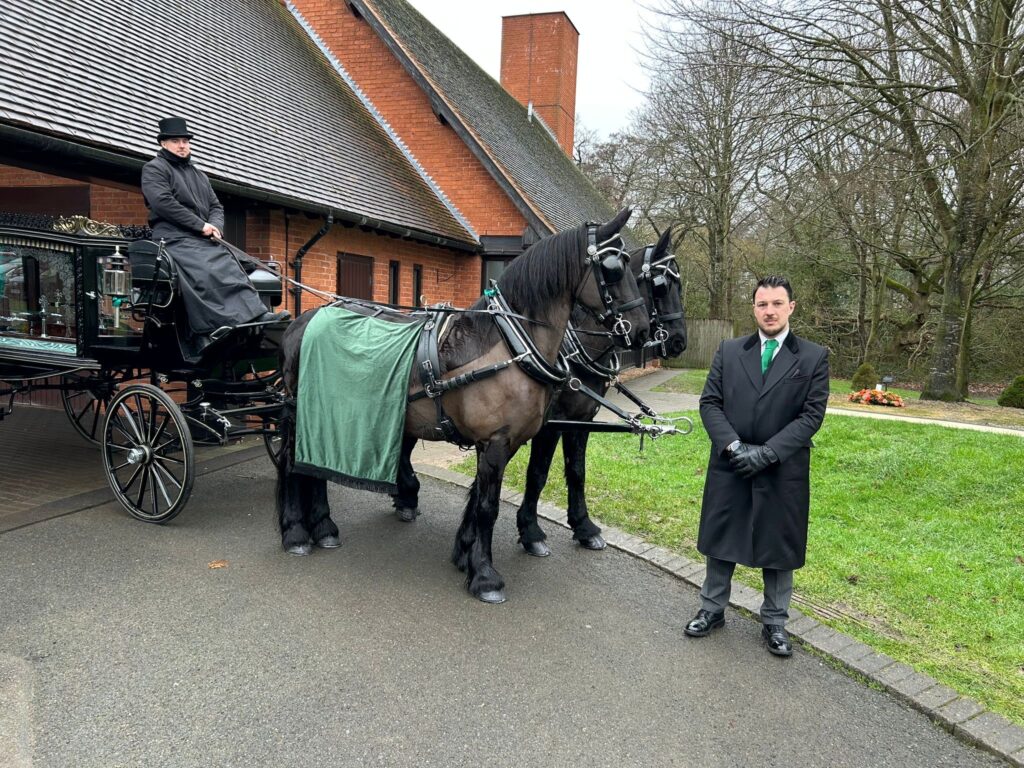
Paging the hearse is the moment the funeral director walks in front of the hearse, and if you live near our funeral homes in Tile Hill or Marston Green you may have seen one of our funeral directors walking at the start of the journey, as we approach the loved ones home, as we leave the address or when approaching the chapel or church.
This historically comes from when horses pulled hearses and needed guiding on foot, but today it remains a powerful visual gesture. It slows the pace, signals importance, and shows the person who has died is being guided with intention and respect.
It’s a quiet moment, but it speaks volumes.

Bowing to the Coffin, and Carrying the Coffin
One of the most recognisable acts a funeral director performs is bowing to the coffin. This is done upon arrival at the loved ones home, as we leave the address and also upon leaving the chapel, church or graveside.
This simple gesture symbolises honour, an acknowledgement of the life lived. For many families, it’s one of the moments that stays with them long after the service.
Carrying the coffin is one of the most symbolic and honourable roles within a funeral. It’s far more than a practical task, it represents accompanying the person on the final steps of their journey.
For the bearers, it is an act of service, dignity, and care. Each movement is deliberate: steady, calm, and respectful. By carrying the coffin on their shoulders or lifting it by hand, the team physically supports the weight of the moment, allowing the family to focus entirely on their grief, their memories, and their goodbyes. We also support and guide families who wish to carry their loved one into the service themselves, as this is such an important undertaking to many. We reassure the bearers that we will be beside them every step ensuring the safety of themselves and their loved one.

For families, seeing the coffin carried can be deeply emotional. It shows that their loved one is being looked after with absolute respect. Not rushed, not hidden behind machinery, but guided by people who understand the importance of this final act.
It’s one of the oldest traditions in the funeral profession, and one that continues today because it so clearly communicates love, honour, and human connection at a time when it’s needed most.
Removing Hats When Meeting Another Cortege
Within the funeral profession, there’s a long-standing show of courtesy: if two funeral vehicles meet, one or sometimes both carrying a coffin, the undertakers remove their hats when passing the cortege.
It’s a small but powerful sign of solidarity across funeral firms. A recognition that whoever that person is and whichever company they are with, they deserve respect.
Most families never see it, but it’s one of those traditions that demonstrates the values the profession still holds.

The Funeral Director’s Cane
The cane is more than decorative. Historically, it was used to clear the path for a cortege. Today, it symbolises leadership and guidance, although it is the personal preference of the funeral director if they choose to use it as the funeral profession carries such authenticity.

You’ll often see the funeral director holding it when paging in front of the hearse, setting the pace and leading the way. It’s both functional and ceremonial, adding structure and formality to the journey.
Black Gloves
Many professional teams now choose black gloves, including us, however some funeral directors will wear white gloves.
Black gloves maintain uniformity and professionalism while offering a more contemporary and understated look. They also protect the hands when bearing and provide a consistent, dignified appearance throughout the service.

Wearing a Top Hat
The top hat has Victorian origins, representing dignity, authority, and composure.
Even now, wearing a top hat sets the tone for the funeral, formal, respectful, and traditional. It helps distinguish the funeral director as the leader of the ceremony and brings a sense of occasion to the cortege.

Theresa at Canley Crematorium
Stopping at the Family Home or a Meaningful Place
Frequently, after we leave the funeral home, the cortege will then travel to the loved ones home address or a family home and pause outside. As mentioned above the funeral director will page to the location and bow, and then upon leaving page away and bow once more.
This gesture gives family, neighbours, or colleagues a chance to gather, pay their respects, or simply acknowledge the importance of that place in the person’s life. If family and friends are following the hearse in our limousines or their own vehicles, this is the opportunity to join their loved one on their final journey. It’s a deeply personal moment, and one of the most meaningful parts of the day.

Funeral Staff Standing in Formation
You’ll often see the funeral team standing in line at the back of the hearse, or with the coffin at the front of the chapel or church.
This creates a guard of honour, showing unity, professionalism, and collective respect. It frames the moment beautifully and emphasises that the person who has died is being cared for by a dedicated team.

Why These Traditions Matter
Traditions like these help create a sense of calm, structure, and dignity. They remind families that their loved one is being treated with absolute respect at every stage, not just during the ceremony, but throughout their entire journey.
At Franklin & Hawkins, we’re proud to continue these customs while delivering a personal, modern approach. We aren’t just following traditions set many years ago, we are proudly honouring a profession we care so deeply about, and the person at the heart of the day.